
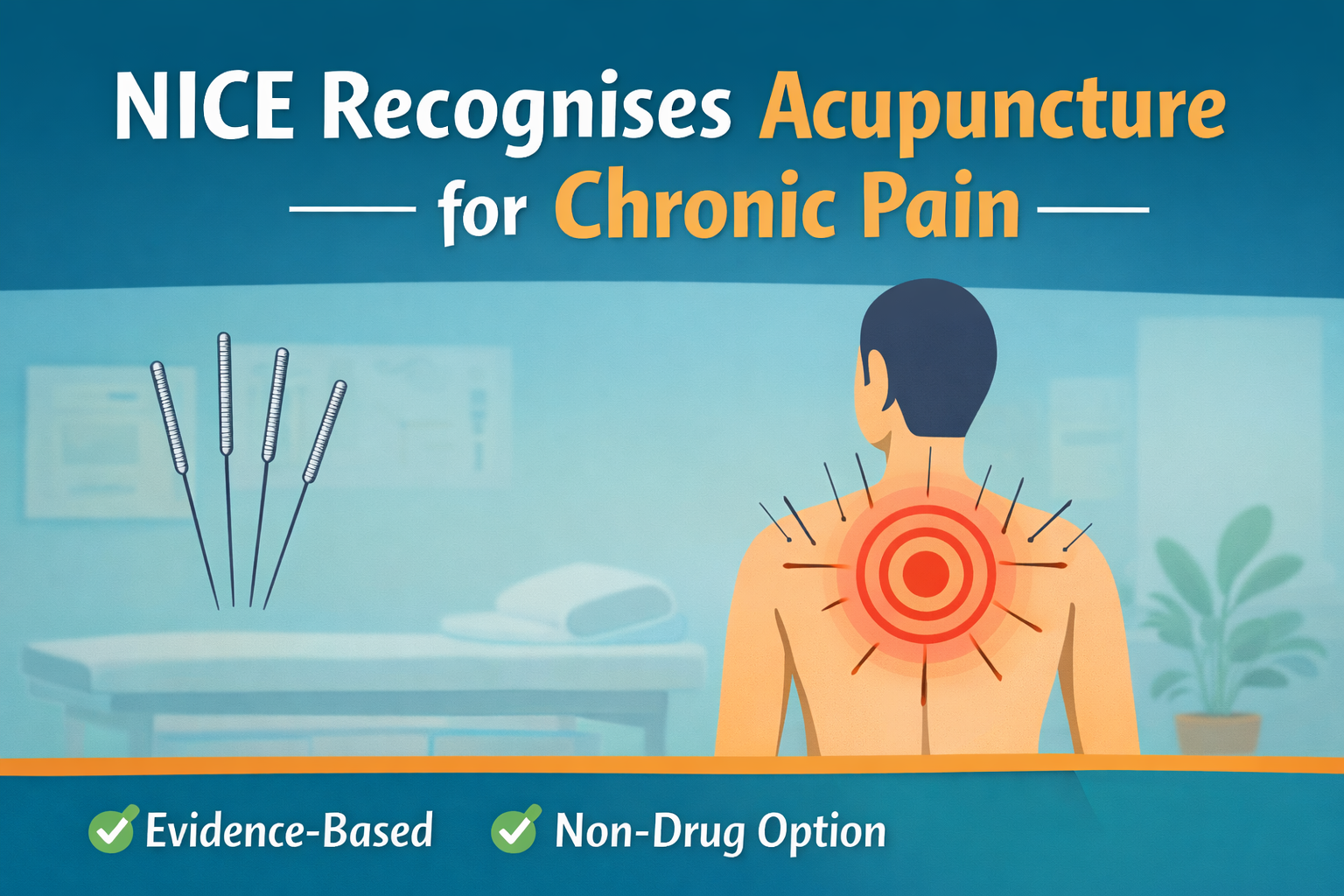
Chronic pain — pain lasting longer than three months — affects millions of people across the UK. For a long time, acupuncture was described mainly as a complementary therapy. Today, that view is changing.
The National Institute for Health and Care Excellence (NICE), the organisation that provides evidence-based guidance for the NHS, now includes acupuncture in its clinical recommendations for certain chronic pain conditions.
This marks an important shift: acupuncture is increasingly recognised not just as traditional practice, but as a modern, evidence-informed clinical option.
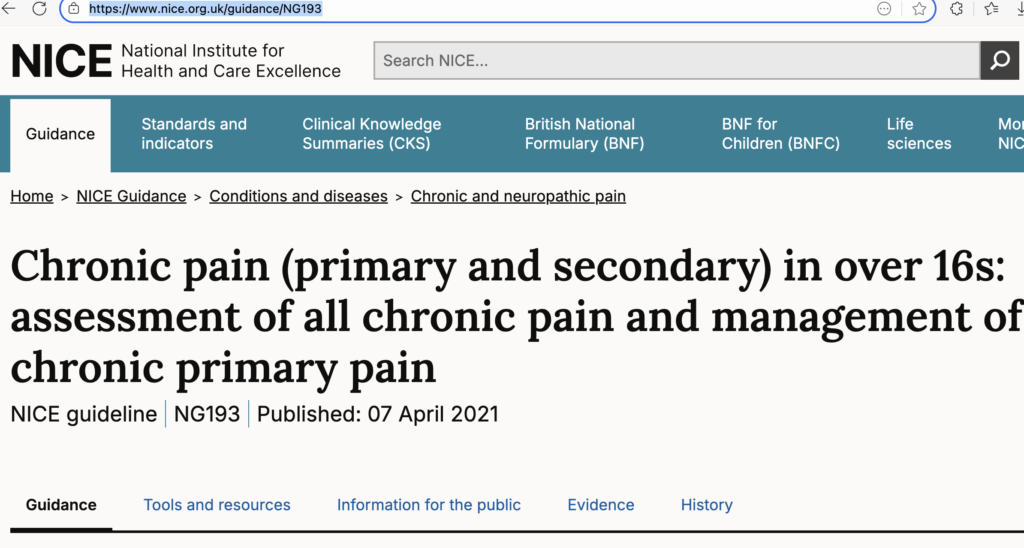
Acupuncture in NICE Guideline NG193 (Chronic Primary Pain)
NICE guideline NG193 covers the assessment and management of chronic primary pain in people aged 16 and over. Chronic primary pain refers to long-term pain that is not fully explained by an underlying disease or where the pain’s impact is out of proportion to observable injury.
Within this guideline, NICE recommends that clinicians may:
Consider a single course of acupuncture or dry needling for the management of chronic primary pain
This should be:
- Delivered in a community setting
- Provided by a healthcare professional with appropriate training
- Structured so that the total professional contact time does not usually exceed five hours
The recommendation is based on research showing acupuncture can help reduce pain and improve quality of life for some people, particularly in the short to medium term. It is also valued as a non-drug option, which is especially important for people who cannot tolerate or do not wish to rely on long-term medication.
Acupuncture for Headache and Migraine
Separate NICE guidance also includes acupuncture for certain headache conditions.
Chronic Tension-Type Headache
In NICE guideline CG150 (Headaches in over 12s), acupuncture is recommended as a preventive treatment option for chronic tension-type headache. NICE advises clinicians to consider:
A course of up to 10 acupuncture sessions over 5–8 weeks
Evidence shows this can reduce the number of headache days and may be a helpful alternative for people who prefer to limit medication use.
Migraine Prevention
For migraine, NICE suggests acupuncture may be considered when commonly used preventive medications (such as propranolol or topiramate) are unsuitable, not tolerated, or ineffective.
Research indicates that acupuncture may help:
- Reduce the frequency of migraine attacks
- Lower overall headache burden
- Decrease reliance on pain medication for some people
Does This Mean Acupuncture Is Covered by the NHS?
NICE guidance means acupuncture is now recognised as an evidence-based treatment option within UK clinical standards. However, NICE does not directly control funding. Decisions about whether a service is provided on the NHS are made locally by NHS commissioners and individual services.
As a result:
- Some NHS pain clinics, GP practices and physiotherapy services do offer acupuncture
- In other areas, access may be limited
- Many people still choose private acupuncture care, sometimes alongside NHS treatment
Local Access in Aberystwyth
In the Aberystwyth area, acupuncture is not just a theoretical option in national guidance, it is something local healthcare professionals are already familiar with.
Lily’s clinic regularly receives NHS referrals from local services, showing that acupuncture is being integrated into real-world care pathways for pain and headache management in this region. Referrals typically form part of a broader care plan and are based on clinical judgement and local service arrangements.
If you are under the care of your GP, physiotherapist or pain specialist, you can ask whether acupuncture might be an appropriate option for your condition and whether referral is possible locally.
Key Takeaway
Acupuncture is no longer viewed only as an “alternative” therapy. NICE now includes it in clinical guidance for:
- Chronic primary pain
- Chronic tension-type headache
- Migraine prevention (in certain situations)
It offers a drug-free, evidence-informed option that can sit alongside conventional medical care as part of a comprehensive pain management approach.
References
- NICE Guideline NG193 – Chronic pain (primary and secondary) in over 16s: assessment and management, https://www.nice.org.uk/guidance/NG193
- NICE Guideline CG150 – Headaches in over 12s: diagnosis and management. https://www.nice.org.uk/Guidance/CG150
- Linde K, Allais G, Brinkhaus B, Fei Y, Mehring M, Shin B-C, Vickers A, White AR. Acupuncture for the prevention of tension-type headache. Cochrane Database of Systematic Reviews 2016, Issue 4. Art. No.: CD007587. DOI: 10.1002/14651858.CD007587.pub2.
- MacPherson H, Vickers A, Bland M, Torgerson D, Corbett M, Spackman E, et al. Acupuncture for chronic pain and depression in primary care: a programme of research. Programme Grants Appl Res 2017;5(3). https://doi.org/10.3310/pgfar05030
True. you can try if you need.